
Uncategorized
The Environmental Benefits of Choosing an eSIM for Your Israel Trip
May
TL;DR
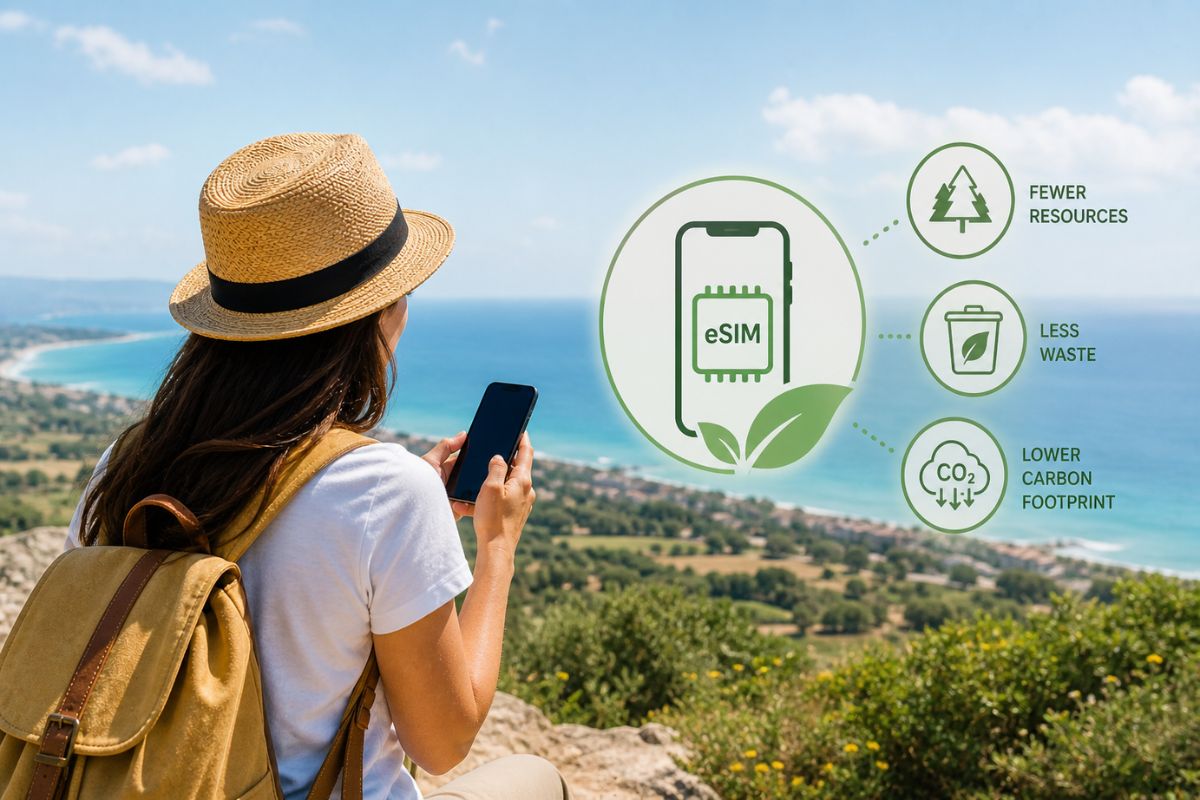
Choosing an Israel eSIM is not only a smart travel decision, but also a more environmentally responsible one. Unlike physical SIM cards, eSIMs reduce plastic waste, packaging, shipping emissions, and unnecessary production. For travelers heading to Israel for holiday, study, or work, a digital solution creates a cleaner, simpler, and more efficient way to stay connected. It also helps avoid the confusion of oversized regional packages, gives you the option to activate service online before takeoff, and lets you choose the right amount of data for your actual journey. If you want convenience, flexibility, and a greener way to travel, an Esim package to Israel is one of the most practical choices you can make.
Why Sustainability Matters When You Travel
Modern travelers are becoming more conscious of the impact their decisions have on the world around them. Flights, hotel stays, transportation choices, and even the way we stay connected all contribute to a trip’s overall footprint. While mobile connectivity may seem like a small detail in the bigger picture, it is one of those everyday travel decisions that can quietly make a difference.
When people prepare for a trip to Israel, they often focus on flights, accommodation, insurance, and itineraries. Connectivity is usually treated as a technical necessity rather than an environmental choice. But the truth is that traditional connectivity methods often involve physical production, packaging, delivery, and waste. A digital alternative changes that equation.
An Israel eSIM offers travelers a way to stay online without relying on a plastic SIM card that needs to be manufactured, packed, transported, sold, inserted, and eventually discarded. It is a small change with practical benefits, and it aligns well with a smarter, more sustainable travel mindset.
The Hidden Waste of Traditional SIM Cards
A physical SIM card may be tiny, but the process behind it is not. Every traditional SIM card involves raw materials, plastic production, printing, packaging, shipping, and retail handling. In many cases, the SIM itself comes attached to a larger plastic card, wrapped in paper materials, and placed into additional packaging for display or transport.
This creates a chain of waste that most travelers never think about. The card is used for a limited time, often only during a trip, and then becomes another disposable item. Even when the amount of plastic seems small on an individual level, the cumulative effect across millions of travelers is significant.
By choosing an Israel eSIM, travelers bypass that entire physical process. There is no plastic card to produce, no unnecessary packaging to throw away, and no extra logistics needed to get the product into your hands. The activation is digital, the setup is fast, and the result is far more efficient from an environmental perspective.
This is one of the clearest benefits of eSIM technology. It removes the material waste built into the old model and replaces it with a digital experience that is better suited to how people travel today.
A Digital Product Means Less Shipping and Fewer Emissions
One of the less obvious advantages of eSIMs is the reduction in transportation needs. Physical products require movement. Whether they are shipped internationally, distributed through warehouses, or sent to airport kiosks and stores, every physical SIM card depends on a logistics network that consumes energy and generates emissions.
An Israel eSIM does not need to be boxed, flown, trucked, or displayed in a shop before it reaches the customer. The entire purchase and activation process can happen online. That may sound simple, but it eliminates several layers of environmental cost that are otherwise baked into physical connectivity products.
For international travelers, this matters even more. Many people used to order SIM cards in advance or wait until arrival to search for one locally. Both options involve unnecessary friction and often more waste. With an eSIM, the product is delivered instantly and digitally, which creates a cleaner and more streamlined travel preparation process.
This kind of digital-first approach is especially valuable in an era when travelers want speed, flexibility, and lower-impact solutions. It is not just about convenience. It is about reducing the dependency on physical systems that are no longer necessary.
Web-Based Activation Before Takeoff Makes Travel More Efficient
One of the strongest practical and environmental advantages of an eSIM is that it can be activated online before your journey begins. Instead of arriving in Israel and spending time searching for a store, standing in line, or dealing with printed instructions and packaging, you can prepare your connection in advance through a web-based process.
This means you land ready to navigate, message, work, or contact family right away. It also means fewer rushed purchases, fewer impulse decisions at airports, and less reliance on retail packaging and printed materials. Every part of the process becomes more efficient.
For travelers going to Israel for business, this is especially valuable. Time is part of operational efficiency. When connectivity is already arranged before takeoff, your arrival is smoother and your trip starts with less stress. For students and holiday travelers, it provides the same peace of mind. You are connected the moment you need it, without adding another physical product to your luggage.
That digital readiness is one of the reasons an Esim package to Israel feels so aligned with modern travel. It is designed for people who want less friction, fewer moving parts, and a more intelligent way to prepare for an international trip.
Country-Specific Simplicity Is Better Than Bloated Regional Packages
Not all travel connectivity options are designed with clarity in mind. Many providers push large regional plans that include long lists of countries, complex conditions, and more data than a traveler actually needs. On the surface, that may sound flexible. In reality, it often means paying for unnecessary coverage and navigating confusing plan structures.
Travelers heading specifically to Israel often do not need a broad, oversized regional bundle. They need reliable service for the country they are actually visiting. A country-specific solution is cleaner, easier to understand, and often more aligned with both budget and actual usage.
This is where Simtoisrael stands out. Instead of forcing travelers into bloated regional packages, the focus is on country-specific simplicity. That makes the purchase more transparent and more practical. You are not sorting through layers of extra destinations that have nothing to do with your itinerary. You are choosing a plan built for Israel.
There is also an indirect environmental logic here. When people are guided toward oversized products they do not need, the whole system becomes less efficient. Digital services should match real demand. A plan tailored to your actual destination is simply smarter than paying for unnecessary extras that complicate the buying experience.
Custom Data Amounts Fit the Journey Better
One of the most overlooked environmental principles is right-sizing. People are increasingly aware of the waste that comes from choosing more than they need, whether that means oversized hotel amenities, excessive packaging, or products designed for unrealistic consumption patterns. The same idea applies to travel data.
A traveler coming to Israel for a short city break has different connectivity needs than someone arriving for a semester abroad or an extended work assignment. A well-designed Israel eSIM allows you to choose the amount of data that actually fits your trip instead of forcing you into a one-size-fits-all package.
That matters from both a user and business perspective. Travelers get better value and more control. Providers can offer cleaner, more relevant solutions. The result is a service model that respects the customer’s real use case rather than pushing volume for the sake of volume.
Custom data options also improve the travel experience itself. You can plan confidently, knowing your package matches the way you intend to use maps, rideshare apps, email, video calls, and social platforms while in Israel. This makes your purchase feel intentional rather than excessive.
How Competitors Often Complicate the Process
In general terms, many competitors make travel connectivity harder than it needs to be. They may offer too many confusing plan layers, bury important details in technical language, or overwhelm users with regional bundles that are not built around the actual destination. Others make activation seem more complex than necessary or leave travelers uncertain about when and how their data will begin working.
This kind of complication does not serve travelers well. It creates hesitation, increases the risk of buying the wrong package, and turns a basic travel need into an unnecessary problem.
A better model is one built on clarity. Travelers want to know what they are buying, when they can activate it, how much data they will have, and whether the solution matches their destination. Simplicity is not just a design preference. It is part of a more responsible and modern travel experience.
That is why a focused Esim package to Israel can feel so refreshing compared to the broader market. It cuts through the clutter and gives travelers a product that is easy to understand before they even board the plane.
Why This Matters for Holiday, Study, and Work Travel
Different kinds of travelers arrive in Israel with different priorities, but all of them benefit from reliable and sustainable connectivity. Holiday travelers want a smooth experience that lets them enjoy the trip without hunting for a SIM card after landing. Students want stable access to maps, messaging, course communication, and local logistics. Business travelers need immediate connection for calls, meetings, transport, and work coordination.
An Israel eSIM supports all of these needs while also aligning with a lower-waste travel model. It is practical, efficient, and easy to integrate into modern travel planning. Instead of adding another disposable product to your trip, you choose a digital service that is ready when you are.
That combination of convenience and environmental responsibility is powerful. Travelers no longer have to choose between doing what is easy and doing what is smarter. With eSIM technology, both goals can work together.
A Smarter Way to Travel to Israel
Sustainable travel is not only about major choices. It is also about small, repeatable decisions that reduce waste and improve efficiency. Choosing an Israel eSIM is one of those decisions. It helps eliminate plastic SIM waste, reduces reliance on shipping and retail distribution, simplifies activation before departure, and gives you data options that actually match your itinerary.
For travelers who care about convenience, clarity, and a more responsible way to stay connected, this is more than a technical upgrade. It is a better travel habit.
When you choose a focused, digital-first solution from Simtoisrael, you make your Israel trip easier from the very beginning. You also make a choice that reflects the future of travel connectivity: less waste, more flexibility, and better alignment with the way people move around the world today.
FAQs
Is an Israel eSIM really better for the environment than a physical SIM card?
Yes, in practical terms it is. A physical SIM card requires plastic production, printed packaging, transportation, retail handling, and eventual disposal. An Israel eSIM removes most of those steps because the service is delivered digitally. While no technology is completely impact-free, eSIMs reduce material waste and cut down on the shipping and packaging associated with traditional SIM cards, making them a more sustainable option for most travelers.
Can I activate my eSIM before I leave for Israel?
Yes, and that is one of the biggest advantages. With web-based activation, many travelers can prepare their Esim package to Israel before takeoff so that connectivity is ready soon after landing. This saves time, reduces stress at the airport, and avoids the need to search for a physical SIM card store after arrival. It is a much more efficient approach for holidaymakers, students, and business travelers alike.
Why is a country-specific eSIM better than a regional package?
A country-specific eSIM is often better because it is built around your actual destination instead of bundling in unnecessary countries and features. If you are traveling specifically to Israel, a focused Israel eSIM is usually easier to understand and more aligned with your needs. Regional plans can sometimes add confusion, higher costs, and extra terms that do not improve your experience. Simplicity often leads to better value and a smoother setup.
How do custom data amounts help travelers?
Custom data amounts help because not every trip is the same. A short vacation, a multi-week work trip, and a student stay all involve different levels of mobile usage. Being able to choose the right amount of data means you are paying for what you are likely to use instead of being pushed into an oversized package. This makes your Esim package to Israel more cost-effective, more relevant, and easier to manage throughout the trip.
Is an Israel eSIM a good option for business travelers?
Absolutely. Business travelers often need immediate access to email, navigation, messaging apps, transport services, and video meetings as soon as they land. An Israel eSIM supports that need by allowing setup before departure and immediate usability on arrival. It also removes the hassle of dealing with physical SIM swaps, store visits, and unnecessary delays, which is especially important when time and efficiency matter.
Do eSIMs make travel simpler overall?
Yes, they do. eSIMs combine convenience, speed, and flexibility in a way that physical SIM cards often cannot match. Instead of dealing with plastic cards, packaging, and manual replacement, travelers can manage connectivity digitally and often before the trip even begins. For anyone planning to visit Israel, this creates a cleaner, more modern experience that feels more in line with the expectations of today’s travel environment.