
Uncategorized
Cellular Data vs. Public Wi-Fi in Israel: Security and Reliability Advantages
May
TL;DR
- Public Wi-Fi in Israel can be convenient, but it is often less secure and less consistent than private cellular data.
- An Israel eSIM helps travelers stay connected for maps, messaging, work, rides, banking, and travel updates without depending on open networks.
- Cellular data is usually the better option for holidaymakers, students, and business travelers who need dependable internet throughout the day.
- Choosing an Esim package to Israel before departure can make arrival much smoother, especially when you need instant access after landing.
- Country-specific plans are often simpler and more efficient than oversized regional packages that include data you may never use.
When people plan a trip to Israel, they often think first about flights, accommodation, transportation, and the places they want to visit. Internet access is usually treated as a secondary detail. In reality, it shapes almost every part of the travel experience. You need it to contact your host, order a taxi, check your itinerary, navigate with maps, translate signs, confirm bookings, and stay in touch with family or colleagues.
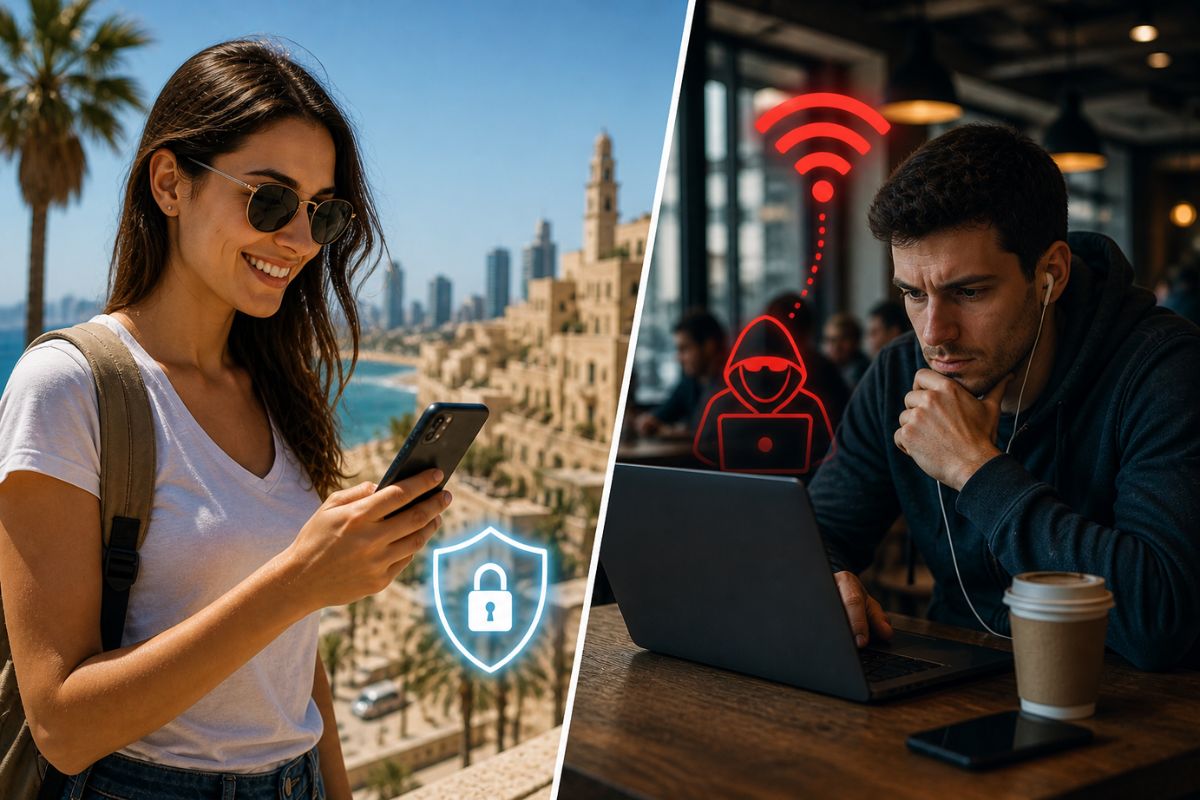
That is why the debate between cellular data and public Wi-Fi matters so much. On the surface, public Wi-Fi may seem like the cheaper or easier option. It is available in airports, hotels, cafes, shopping centers, and some public spaces. But convenience on paper does not always translate into a reliable real-world connection. Travelers often discover that public Wi-Fi is slower, less secure, and far less predictable than they expected.
For most visitors, an Israel eSIM is the smarter choice. It offers more control, better privacy, and a stronger sense of independence from the moment you land.
Why public Wi-Fi feels convenient but often falls short
Public Wi-Fi can look attractive because it appears to be free. If you are sitting in a hotel lobby or a coffee shop, connecting to a local network may feel like a quick solution. But travel is not static. You are not spending your entire day in one place. You are moving between cities, taking trains, walking through unfamiliar streets, attending meetings, or exploring tourist sites. In those moments, Wi-Fi is either unavailable or unreliable.
Even when public Wi-Fi is available, the experience can be inconsistent. Some networks require repeated logins. Others limit session time. Many are crowded, especially in busy tourist areas, which reduces speed and stability. A connection may work well enough for opening a simple webpage, then fail when you try to make a call, upload a document, or use navigation in real time.
This becomes especially frustrating in Israel, where travelers often depend on live navigation and instant communication. A weak Wi-Fi connection is not just annoying. It can disrupt your plans, delay your route, or leave you stranded without the information you need.
The security risks of public Wi-Fi
Security is one of the biggest reasons travelers should think carefully before relying on public Wi-Fi. Open or poorly protected networks can expose users to unnecessary risk. This is especially important if you access work email, payment apps, cloud files, or any account that contains personal information.
The main issue is simple. Public Wi-Fi is shared. That means the environment is less private by nature, and bad actors often target these networks because users tend to trust them too easily.
Here are some of the most common concerns:
- Fake hotspots that imitate real hotel, airport, or cafe networks
- Unencrypted traffic that may expose sensitive information
- Session hijacking or account access risks on unsecured connections
- Unwanted tracking through public network usage
- Reduced confidence when accessing banking, business, or identity-sensitive services
For a holiday traveler, this may mean risking access to personal accounts. For a student, it could affect academic portals or online registrations. For a business traveler, it can become a much more serious issue involving company emails, documents, and internal systems.
A private cellular connection through an Israel eSIM gives you a more secure foundation. It does not remove every online risk, but it does reduce your dependence on open networks that are inherently more vulnerable.
Reliability matters more than travelers expect
A secure connection is important, but reliability is what travelers feel every day. You notice it when your ride-hailing app fails to load, when your map freezes in the middle of a route, or when you cannot receive the message with your apartment access instructions.
Reliable mobile data creates peace of mind. It means you do not need to stop and search for a coffee shop just to get online. It means you can communicate immediately after landing, confirm a meeting on the way, or look up directions while walking through a new neighborhood.
This is especially valuable for people arriving in Israel for work or long-term study. Their internet needs usually go beyond casual browsing. They may need hotspot access, stable messaging, email synchronization, document downloads, and video calls. Public Wi-Fi is rarely designed to support that kind of consistency throughout a full day of movement.
By contrast, cellular data keeps the connection personal, portable, and ready whenever you need it.
Why an Israel eSIM is a stronger option for modern travel
The biggest advantage of an Israel eSIM is that it aligns with the way people actually travel today. Instead of waiting to find a physical SIM or depending on random Wi-Fi access, you can prepare your connectivity in advance and arrive ready.
With the right Esim package to Israel, you can activate your plan before takeoff and land with data already set up. That means you can check directions from the airport, message your driver, confirm your accommodation, or contact family as soon as you arrive.
This web-based activation model is especially helpful for international travelers who want to reduce friction. There is no need to hunt for a local kiosk, compare unfamiliar options at the airport, or risk being offline during the most important first hours of the trip.
It also supports a cleaner travel experience. Your phone remains ready to use with minimal setup, and you can move into your trip with confidence instead of troubleshooting connectivity.
Country-specific simplicity vs bloated regional packages
Many travelers assume a regional package is automatically the best choice. It sounds broader, and broader often sounds better. But in practice, regional plans are often bloated. They may include countries you are not visiting, confusing limits, or pricing structures that do not reflect your actual travel needs.
A country-specific solution is often much more practical. If your destination is Israel, you want a plan built for Israel. That means simpler choices, clearer expectations, and fewer wasted features.
This is where a focused provider makes a difference. Instead of pushing oversized packages, a country-specific approach gives travelers what they actually need. You choose your destination, pick your data amount, and activate with clarity. That is better for tourists on short stays, students on defined budgets, and business travelers who need straightforward tools without unnecessary complexity.
Competitors often complicate this process in general ways. They bundle destinations together, bury plan details, or make users sort through multiple options that feel similar but behave differently. For travelers who just want dependable service in one country, that complexity creates hesitation and mistakes.
A cleaner structure is not only easier to buy. It is easier to trust.
Custom data amounts that fit your journey
Not every traveler uses data in the same way. Some people need light access for maps, messages, and checking reservations. Others need heavier usage for remote work, video calls, uploads, or long stays. The best connectivity solution is one that matches the trip instead of forcing the traveler into a one-size-fits-all package.
Custom data amounts matter because they let you pay for what you are likely to use. A short city break and a three-week work trip are not the same. A student settling into life in Israel has different needs from a couple visiting for a holiday.
When your plan fits your journey, your budget feels more reasonable and your data use feels more intentional. That kind of flexibility is one of the strongest arguments for choosing a dedicated Israel eSIM over relying on public Wi-Fi or overpaying for a plan that was never really designed for your trip.
A note for long-haul travelers and those coming from Oceania
For travelers arriving from faraway regions such as Oceania, connectivity planning becomes even more important. Long journeys, layovers, time zone shifts, and airport transitions make it riskier to depend on finding reliable Wi-Fi at each stage. By the time you land in Israel, you often need immediate access to maps, messages, and transport information without delay.
This is one reason pre-trip activation is so valuable. Rather than waiting until arrival and hoping the local connection process goes smoothly, you can set up your data before departure and reduce uncertainty from the first moment of your trip. When a journey is long, the value of simplicity rises.
Better connectivity supports better travel decisions
Reliable data is not just about internet access. It improves the quality of your decisions. You can compare transport routes in real time, find updated business hours, make last-minute reservations, access translation tools, and stay informed if plans change.
For business travelers, strong mobile data supports responsiveness and professionalism. For students, it supports independence. For tourists, it removes friction from daily experiences and makes the trip feel smoother from start to finish.
Public Wi-Fi still has a place. It can be useful as a backup in hotels, cafes, or shared spaces. But it should not be the foundation of your travel connectivity strategy. If your day depends on being reachable and informed, private cellular data is the more reliable path.
An Israel eSIM gives you that path in a form that feels modern, efficient, and traveler-friendly.
Final thoughts
The difference between cellular data and public Wi-Fi in Israel comes down to confidence. Public Wi-Fi may be available in some places, but it is rarely the connection you want to rely on for security, speed, and consistency. Cellular data gives you a more dependable experience, especially when your plans are moving quickly and your internet access affects every part of the day.
Choosing an Esim package to Israel before your trip is one of the simplest ways to reduce uncertainty and improve your arrival experience. It helps you stay connected on your terms, protects your online activity more effectively than open networks, and supports the kind of travel that is flexible, informed, and stress-free.
For holidaymakers, students, and professionals alike, that is not just a technical advantage. It is a better way to travel.
FAQs
Is public Wi-Fi in Israel safe enough for everyday travel use?
Public Wi-Fi in Israel can be useful for light and casual browsing, but it should not be treated as your primary connection for important tasks. Open or shared networks always carry a higher level of risk, especially when you are signing into email, banking, work platforms, or any account with personal information. For everyday travel needs such as maps, messaging, and real-time bookings, a private mobile connection through an Israel eSIM is usually the safer and more dependable option.
Why is an Israel eSIM better than depending on hotel and cafe Wi-Fi?
Hotel and cafe Wi-Fi may seem convenient, but they only help when you are physically in those locations and when the network is working well. Travel in Israel is dynamic, and most people need internet while moving between places, navigating unfamiliar streets, or handling bookings on the go. An Israel eSIM gives you mobile access throughout the day, which makes it more practical for real travel situations than waiting for the next available Wi-Fi connection.
Can I activate my eSIM before flying to Israel?
Yes, that is one of the strongest benefits of using an eSIM for travel. Web-based activation before takeoff means you can prepare your phone in advance and land with connectivity already available. This can save valuable time on arrival and helps you handle essential tasks immediately, such as contacting your host, ordering transportation, or opening navigation apps from the airport.
Is a country-specific plan better than a regional package for Israel?
In many cases, yes. Country-specific plans are often easier to understand and more aligned with what travelers actually need. Regional packages can be oversized and include destinations you are not visiting, which may add cost or confusion without adding real value. If Israel is your main destination, a focused Esim package to Israel usually offers a simpler and more relevant solution.
How much mobile data do I need for a trip to Israel?
The right amount depends on how you travel. Light users who mainly need maps, messages, and booking access may need only a modest plan. Heavier users who rely on hotspot sharing, video calls, cloud tools, or long daily navigation may need more. The best option is to choose a provider that offers custom data amounts so your plan fits the length and style of your journey rather than forcing you into an unsuitable package.
Is an Israel eSIM useful for business travelers and students too?
Absolutely. Business travelers often need stable access to email, documents, communication tools, and navigation throughout the day. Students may need data for campus coordination, transport, local services, and staying connected with family abroad. In both cases, an Israel eSIM offers more reliability and privacy than public Wi-Fi, making it a practical choice for people who need a serious connection, not just occasional internet access.