
Uncategorized
Navigating Israel: Why Reliable eSIM Data is Crucial for Waze and Google Maps
May
TL;DR
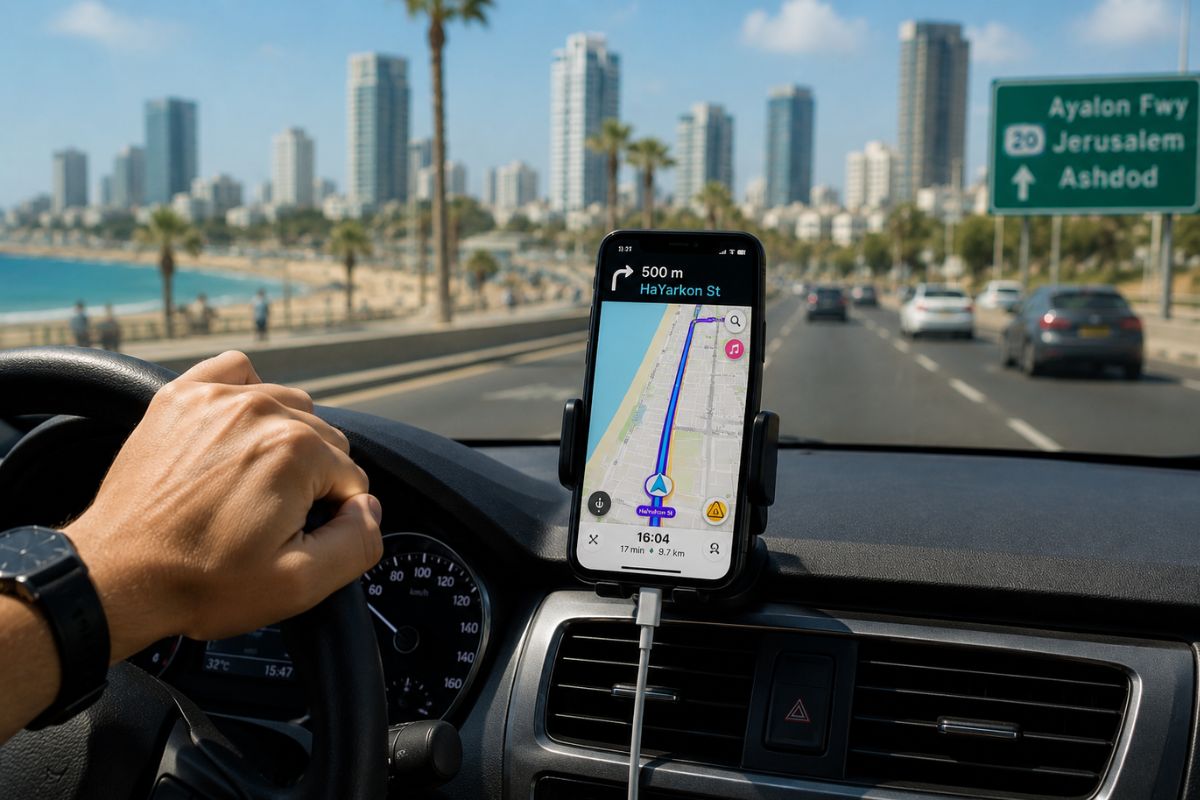
Traveling in Israel can be exciting, fast-paced, and deeply rewarding, but getting around smoothly often depends on having reliable mobile data. Whether you are landing in Tel Aviv for a holiday, moving for studies, or arriving for work, apps like Waze and Google Maps can quickly become essential tools for daily movement. An Israel eSIM gives travelers immediate connectivity, helping them avoid wrong turns, delays, language barriers, and the stress of searching for Wi-Fi when they need directions most. It also supports a more productive and confident trip, especially for business travelers who need to stay punctual and efficient. Choosing the right plan matters, and a flexible Esim package to Israel can make the difference between a seamless travel experience and a frustrating one.
Why navigation in Israel depends on strong mobile data
Israel is a relatively small country geographically, but it moves fast. Roads can become crowded, city traffic patterns can shift quickly, and route conditions may change in real time. Visitors often assume that because distances are short, navigation will be simple. In reality, the efficiency of your travel often depends on how quickly your navigation app can update routes, recalculate traffic, and guide you to the right entrance, station, hotel, office building, or campus.
That is where reliable data becomes essential. Waze and Google Maps are not static tools. They constantly refresh information about traffic congestion, accidents, road closures, estimated arrival times, and alternate routes. Without dependable connectivity, these features become less useful exactly when you need them most. A delayed refresh can send you into traffic instead of around it. A weak signal can interrupt your search for public transportation connections. For someone unfamiliar with local roads, neighborhoods, or Hebrew street names, that can create unnecessary pressure very quickly.
An Israel eSIM helps solve that problem by keeping your device connected from the moment your trip begins. Instead of waiting until arrival to buy a local SIM card or relying on patchy airport Wi-Fi, you can prepare in advance and land with your mobile navigation already ready to work.
Waze and Google Maps are not optional for many travelers
For many visitors, navigation apps are no longer a convenience. They are a central part of the travel experience. Tourists use them to move between hotels, beaches, restaurants, museums, and historical sites. Students use them to find campuses, housing, transit stations, and part-time jobs. Professionals use them to arrive on time for meetings, conferences, site visits, and business dinners.
Israel is also one of the places where Waze feels especially natural to use. Because conditions can change quickly, real-time traffic routing is incredibly valuable. Google Maps is equally useful for walking routes, public transportation, and business listings. But neither app performs at its best without stable mobile data. If your plan is too limited, too slow, or unnecessarily complicated, your navigation experience suffers.
This is why choosing the right Esim package to Israel is not only a matter of convenience. It is a practical travel decision that affects time management, confidence, safety, and overall peace of mind.
The hidden cost of poor connectivity while traveling in Israel
People often compare travel connectivity options by price alone. That is understandable, but it can be misleading. The real cost of poor connectivity is often measured in wasted time, missed opportunities, and unnecessary stress.
Imagine arriving in Jerusalem and losing signal just as your driver nears a hotel located on a narrow side street. Imagine trying to reach a university office in Haifa while your route stops updating. Imagine heading to an important business meeting in Tel Aviv and realizing your map cannot refresh because your plan is throttled or your data allowance is already nearly used up. These are not dramatic scenarios. They are very common travel moments.
Reliable data reduces friction. It helps you adjust plans instantly, communicate arrival times, book transportation more easily, and avoid becoming overly dependent on strangers, hotel desks, or public Wi-Fi networks. For business travelers, it also reinforces professionalism. Being reachable and arriving on time matters. For tourists, it creates freedom. You can explore more confidently when you trust your phone to guide you accurately.
Why eSIM is often the smartest option for modern travelers
Traditional SIM cards still exist, but they are no longer the most efficient solution for many international travelers. Physical SIMs often require store visits, swapping cards, or losing valuable time after landing. By contrast, an Israel eSIM offers a more modern and traveler-friendly approach.
One of the biggest advantages is convenience before departure. With web-based activation before takeoff, travelers can set up service in advance and arrive already connected. This is especially valuable after a long flight, when the last thing anyone wants is to search for a telecom counter or troubleshoot connectivity in an unfamiliar airport. Instead of making your first hour in Israel about logistics, you can make it about moving forward.
eSIM also supports flexibility. Many travelers today use dual SIM devices, which means they can keep their main number active while using local data for navigation and day-to-day travel. That creates a smoother balance between personal communication, professional needs, and location-based app usage.
HOAMSIM’s country-specific simplicity matters
One of the clearest frustrations travelers face is unnecessary complexity. Many providers push bloated regional packages that cover many countries whether you need them or not. At first glance, these broader packages may seem attractive. In practice, they often include extra cost, confusing terms, unnecessary coverage, or data structures that do not match how you actually travel.
If your destination is Israel, it makes sense to choose a service designed specifically for that country. HOAMSIM’s country-specific simplicity stands out because it aligns with real traveler needs. Instead of asking customers to pay for an oversized regional bundle, it focuses on what matters for the journey ahead. That means a more direct purchase process, clearer expectations, and a better fit for people whose travel plans are centered on Israel itself.
This type of simplicity is especially important for navigation-heavy use cases. When travelers depend on Waze and Google Maps throughout the day, they need to know exactly what they are getting. A clear plan is easier to trust. A targeted solution is easier to manage. A country-specific approach is often more practical than paying for a larger package full of destinations that never become relevant.
Custom data amounts create a better travel experience
Not every traveler uses data in the same way. Someone coming for a short city break may only need enough data for navigation, messaging, and light browsing. A student or remote worker may need a more substantial allowance for longer stays and more constant usage. A business traveler may need dependable access every day for maps, email, calls, and scheduling platforms.
That is why custom data amounts are so important. A strong Israel eSIM option should fit the shape of your trip rather than forcing you into a one-size-fits-all plan. When data amounts are tailored to journey length and usage style, travelers avoid two common mistakes: overpaying for data they will never use or choosing a plan that runs out too soon.
Navigation apps may look lightweight, but frequent use adds up over time, especially when travelers also search for restaurants, attractions, taxis, train times, hotel locations, or translated business addresses. The right plan provides enough room for these real-world behaviors without making users feel constrained. That sense of freedom matters. It changes how people move through the country and how confidently they explore.
How competitors often complicate the process
In general terms, many competitors make mobile travel connectivity harder than it needs to be. Some present too many plan variations without clearly explaining the differences. Others emphasize regional coverage rather than destination relevance. Some make activation feel technical and intimidating. Others bury important details about validity, speed, or data limits in fine print.
This complexity can be especially frustrating for first-time travelers to Israel. They are already planning flights, accommodation, transportation, and schedules. Connectivity should not become another confusing project. It should be simple, direct, and dependable.
A cleaner approach makes a real difference. Travelers want to know that their plan will work, that activation will be smooth, and that their data will support the apps they depend on most. When providers make users sort through vague comparisons, oversized packages, or unnecessary setup steps, trust begins to erode. In contrast, a straightforward Esim package to Israel gives travelers clarity and reassurance before they even board the plane.
The broader travel lesson from coverage challenges in Oceania
Although this article focuses on Israel, it is worth noting a wider issue in international connectivity. Challenges of finding coverage in Oceania have shown travelers around the world how inconsistent some global and regional mobile products can be. In some destinations, broad regional packages appear convenient on paper but fail to deliver the clarity or reliability travelers expect.
That comparison matters because it highlights why country-specific planning is often smarter. Travelers have become more aware that coverage quality, plan structure, activation simplicity, and data flexibility vary significantly by provider and by destination. The lesson is simple: do not assume that larger packages are better packages. Better usually means more relevant, more transparent, and more aligned with your actual route.
For Israel, where navigation apps can play a central role in every day of the trip, this relevance becomes even more important. You are not buying abstract connectivity. You are buying the ability to move confidently from one place to another.
Reliable data supports not only travel, but opportunity
An Israel eSIM is about much more than maps. It supports the flow of the entire journey. When your connectivity is stable, you can search, book, communicate, confirm, adapt, and respond in real time. That helps tourists enjoy their itinerary with less stress. It helps students build routines more quickly. It helps professionals stay efficient, punctual, and responsive.
There is also a strong emotional benefit. Travel feels different when you are not worried about losing your way. You become more open to discovery. You can take spontaneous detours, visit places off your original route, and still feel in control. That is one of the quiet strengths of reliable mobile service. It removes hesitation and replaces it with confidence.
For anyone planning a trip to Israel, choosing the right connectivity solution is one of the smartest early decisions you can make. It affects how you navigate, how you communicate, and how smoothly your days unfold. A simple, targeted, flexible solution can set the tone for the entire experience.
Final thoughts
Israel is a destination full of movement, energy, and opportunity. Whether you are visiting for leisure, education, or work, the ability to navigate efficiently matters more than many travelers expect. Waze and Google Maps are essential tools, but they only work as well as the data connection behind them. That is why investing in a reliable Israel eSIM is not just a technical choice. It is a practical step toward a more empowered and enjoyable journey.
With web-based activation before takeoff, country-specific simplicity, and custom data amounts that fit the real shape of your trip, the right solution helps you start strong and stay connected where it counts. A well-chosen Esim package to Israel gives you more than access. It gives you confidence, flexibility, and the freedom to focus on why you came in the first place.
FAQs
Why is an Israel eSIM important for using Waze and Google Maps?
An Israel eSIM is important because navigation apps depend on live data to provide accurate directions, traffic updates, transit options, and route changes. In Israel, where road conditions and traffic patterns can shift quickly, stable connectivity helps travelers avoid delays and confusion. It also reduces dependence on public Wi-Fi or physical SIM purchases after landing, making the travel experience faster, smoother, and more efficient from the start.
Is an eSIM better than a physical SIM for travelers to Israel?
For many travelers, eSIM is the better option because it is easier to activate, more flexible, and more convenient before departure. Instead of swapping physical cards or searching for a local store after arrival, travelers can prepare their plan in advance and land already connected. This is particularly useful for anyone who wants immediate access to maps, booking apps, ride services, and communication tools as soon as they arrive in Israel.
How much data do I need in Israel if I mainly use maps and navigation apps?
The amount of data you need depends on the length and style of your trip, but navigation use is often more frequent than travelers expect. Waze and Google Maps consume data throughout the day, especially when paired with location searches, ride-hailing, browsing, translation, and messaging. A flexible plan with custom data amounts is often the best choice because it lets you match your connectivity to your actual itinerary instead of paying for too much or running out too early.
Why are country-specific eSIM plans often better than regional packages?
Country-specific plans are often better because they are built around the destination you are actually visiting. Regional packages may sound convenient, but they can include unnecessary countries, unclear terms, and pricing that does not reflect your real needs. A focused Esim package to Israel is usually easier to understand and better suited for travelers who want reliable performance, transparent activation, and enough data for daily navigation and communication.
Can I activate my eSIM before flying to Israel?
Yes, and this is one of the major advantages of choosing an eSIM. Web-based activation before takeoff allows travelers to set up connectivity before they leave home, which means they can land ready to use maps and other essential apps immediately. This removes a major layer of uncertainty after arrival and helps make the first few hours in Israel feel organized, efficient, and much less stressful.
Is reliable mobile data important for business travel in Israel too?
Absolutely. For business travelers, reliable data is directly connected to punctuality, professionalism, and productivity. It supports not only navigation through cities such as Tel Aviv, Jerusalem, and Haifa, but also meeting coordination, communication, schedule changes, and quick decision-making throughout the day. A dependable Israel eSIM helps business visitors stay efficient and responsive while reducing delays and distractions during an already demanding trip.